

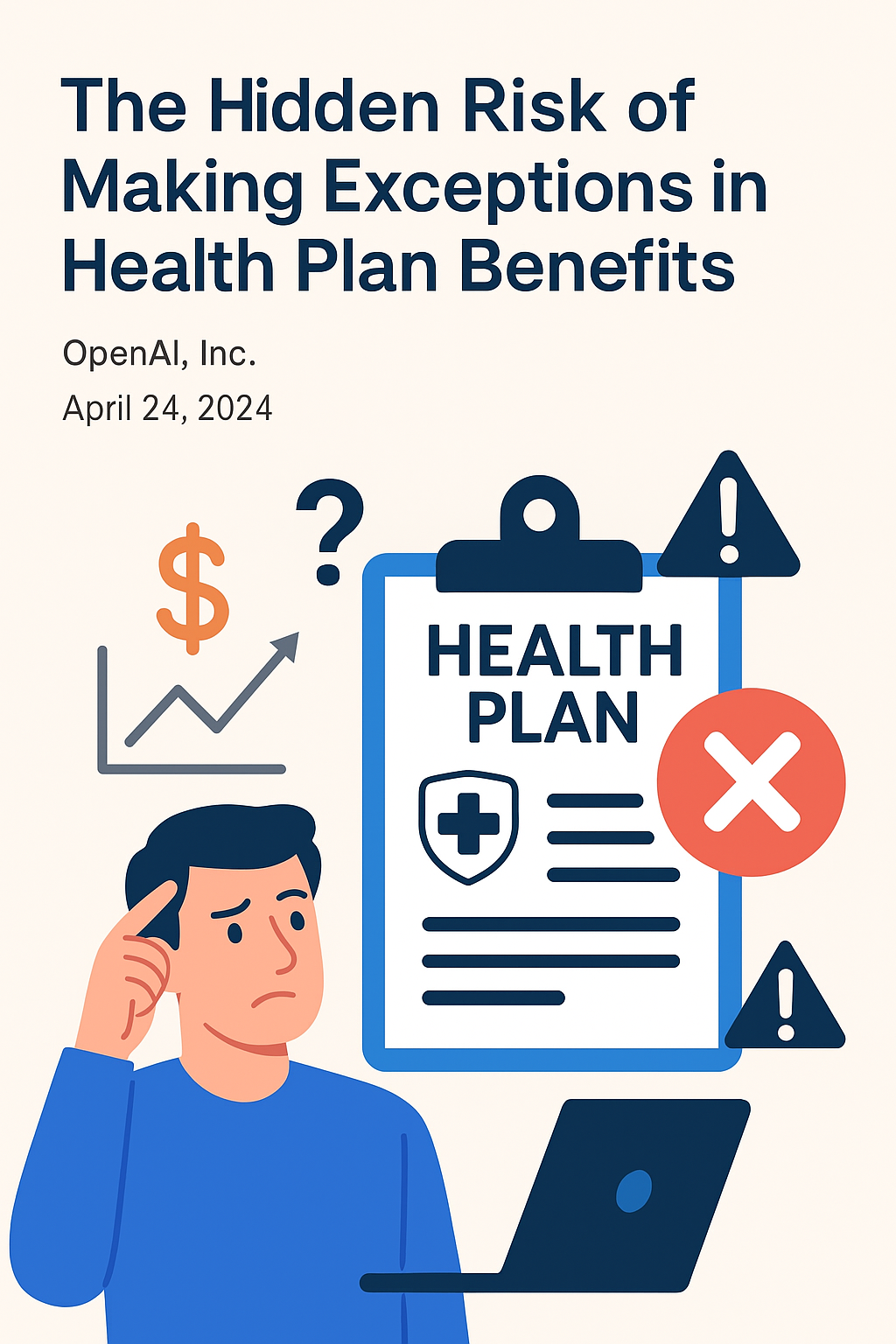
Making Exceptions Can Cost More Than You Think
Employers often want to support their employees by making special exceptions to their group health plans—especially in challenging situations. While these actions may seem compassionate and employee-friendly, they can create significant compliance risks and financial liabilities.
Why Exceptions Can Be Problematic
Health plans—especially fully insured and self-funded ERISA plans—must follow strict plan documents and rules. These documents determine what is covered, who is eligible, and under what conditions. If an employer allows an exception that goes against the terms of the plan (like extending coverage to an ineligible employee or covering a service that’s excluded), they may unknowingly breach their fiduciary duties under ERISA.
This could result in:
-
Loss of stop-loss coverage in self-funded plans
-
Legal liability for denied claims that were improperly promised
-
Penalties for not following documented plan terms
-
Audits and compliance investigations
Real-Life Example: A Costly Mistake
Imagine an employer allows an employee who no longer meets eligibility requirements to stay on the plan. Later, the employee files a high-cost claim—and the insurer or stop-loss carrier denies it due to ineligibility. The financial burden then falls squarely on the employer.
Best Practices for Employers
To avoid these risks, employers should:
-
Stick to plan rules: Never make verbal promises or undocumented exceptions.
-
Review eligibility regularly: Ensure that only qualified individuals are enrolled.
-
Document everything: If a change is necessary, amend the plan officially.
-
Educate HR teams: Make sure those administering benefits understand the rules.
When in Doubt, Ask for Help
Always consult with your broker or legal advisor before making any plan exceptions. What seems like a small favor today could become a costly issue tomorrow.